
WHAT IS ASSISTED HYGIENE? A COMPLETE GUIDE FOR DENTAL OFFICES
What it is, how it works, why some hygienists hate it, and how to determine if it's right for your practice.
After 20 years of practicing in an assisted hygiene model, I’ve seen what works, what doesn’t, and why. Here’s everything you need to know to make an informed decision for your practice, your team, and your patients.
What Is Assisted Hygiene?
Assisted hygiene is a model in which a dental hygienist works alongside a dental assistant (who is designated to specifically work in the hygiene department) to provide patient care more efficiently.
The goal of assisted hygiene is not to make the hygienist work faster or harder. The goal is to remove tasks that do not require a hygienist, so the hygienist can spend more time performing the clinical procedures that only a hygienist can provide.
When implemented correctly, assisted hygiene allows practices to increase access to care, improve patient flow, reduce bottlenecks, and increase hygiene production without sacrificing care. It should also create a greater earning opportunity for the hygienist. And, when implemented effectively, it should also allow the patient to spend less time in the dental chair, as the flow is created to minimize patients and clinicians from simply ‘waiting’.
WHAT THE DATA REVEALS
HOW ASSISTED HYGIENE WORKS

Patient Seated
Dental Assistant greets and seats the patient

Dental Assistant takes any necessary radiographs
Radiographs Taken

Hygienist Provides Clinical Tasks
Medical Hx, Assessment & Codiscovery, Instrumentation, and Patient Education

While the hygienist moves on to another operatory, the dental assistant completes polishing/flossing/fluoride
Assistant Supports Flow

Doctor completes exam, diagnoses any areas of convern, treatment plan created
Periodic Exam

Room turned over and prepared for the next patient
Patient Dismissed
A WELL DESIGNED SYSTEM

patients per day
production per hour
12-14
$330-$350+
Lower
Better
How I Practice Assisted Hygiene
I've worked in a two-column assisted hygiene system for more than 20 years.
On a typical day, I see an average of 12–14 patients while producing between $330-$350 per clinical hour. It’s also important to note that number is after insurance payments and adjustments have processed. This isn’t just possible in Fee For Service practices!
Many clinicians assume that must mean I'm rushing through appointments, but the reality is quite the opposite. I would argue that I have more time on the areas of the appointment that I need to, than clinicians do that have to handle every task required during a one hour appointment.
The reason the system works so well is because I spend the majority of my time performing hygiene, not turning over rooms, taking radiographs, waiting for doctor exams, or completing tasks that can be delegated appropriately.
My appointment time is well managed and protected so that so I can focus on patient care.
hygienist burnout
patient experience
COMMON MISCONCEPTIONS ABOUT ASSISTED HYGIENE
"The hygienist is seeing two patients at once."
Not exactly. The hygienist is operating out of two rooms, but the goal is not for one provider to provide care to two patients simultaneously.
The goal is to eliminate downtime and keep patients moving efficiently through the appointment.
"Patients receive lower-quality care."
Poorly designed assisted hygiene systems can absolutely create this problem, but well-designed ones actually do the opposite.
When the hygienist spends more time on clinical care and less time on non-clinical tasks, patients often receive more focused attention where it matters most. I have more than enough time to discuss sleep, TMD, clenching/grinding, perio issues and caries risk.
"The hygienist has to work harder and faster."
This is probably the most common misconception. If assisted hygiene requires the hygienist to work harder or faster, then it’s set up to fail. After practicing the way I have for twenty years and I still haven’t burned out, I know how well this can support the hygienist. I’ve lived it myself.
FREQUENTLY ASKED QUESTIONS
Why do some assisted hygiene systems fail?
Many assisted hygiene systems fail because practices focus on adding patients rather than improving systems.
Common mistakes include:
Poor assistant training, or a dental assistant that’s not designated for the hygiene department specifically
Lack of clearly defined responsibilities
Inadequate doctor support
Inefficient scheduling
Too much reliance on the hygienist to manage every aspect of the appointment
When these issues exist, frustration and burnout will follow very quickly.
Is Assisted Hygiene Right for Every Practice?
No. Not every practice has the physical layout, staffing structure, culture, or goals necessary for assisted hygiene.
And, an assisted hygiene model isn’t for every hygienist. Just as the same as seeing one patient per hour isn’t for every hygienist. As much as I love this field, if I saw one patient per hour, I don’t know if I would still be a hygienist today.
But many practices dismiss the model before understanding what it actually looks like when implemented correctly.
The question is not whether assisted hygiene works. The question is whether it’s been designed and implemented in your practice to support everyone involved: the patient, the hygienist, the assistant, the doctor, and the practice.
Does assisted hygiene reduce quality of care?
Not when it’s designed well. When it’s designed well, it supports the hygienist to give them the time needed to provide true comprehensive care.
Is assisted hygiene the same as accelerated hygiene?
It’s not. While the terms may sometimes used interchangeably, they are not the same thing.
Accelerated hygiene generally refers to increasing the number of patients seen in a given period of time. Assisted hygiene refers to a staffing and workflow model in which a dental hygienist works alongside a dedicated dental assistant to improve efficiency and patient flow.
Can Assisted Hygiene Help Address the Hygiene Shortage?
In many practices, yes.
The hygiene shortage is very real. Across the country, practices are struggling to recruit hygienists and fill open positions. But hiring another hygienist is not the only way to accommodate your growing patient base.
Many practices assume their hygienists spend most of their appointment providing clinical care. In reality though, my survey data suggests that much of a hygiene appointment is spent on tasks that do not require a hygienist's education, licensure, or expertise.
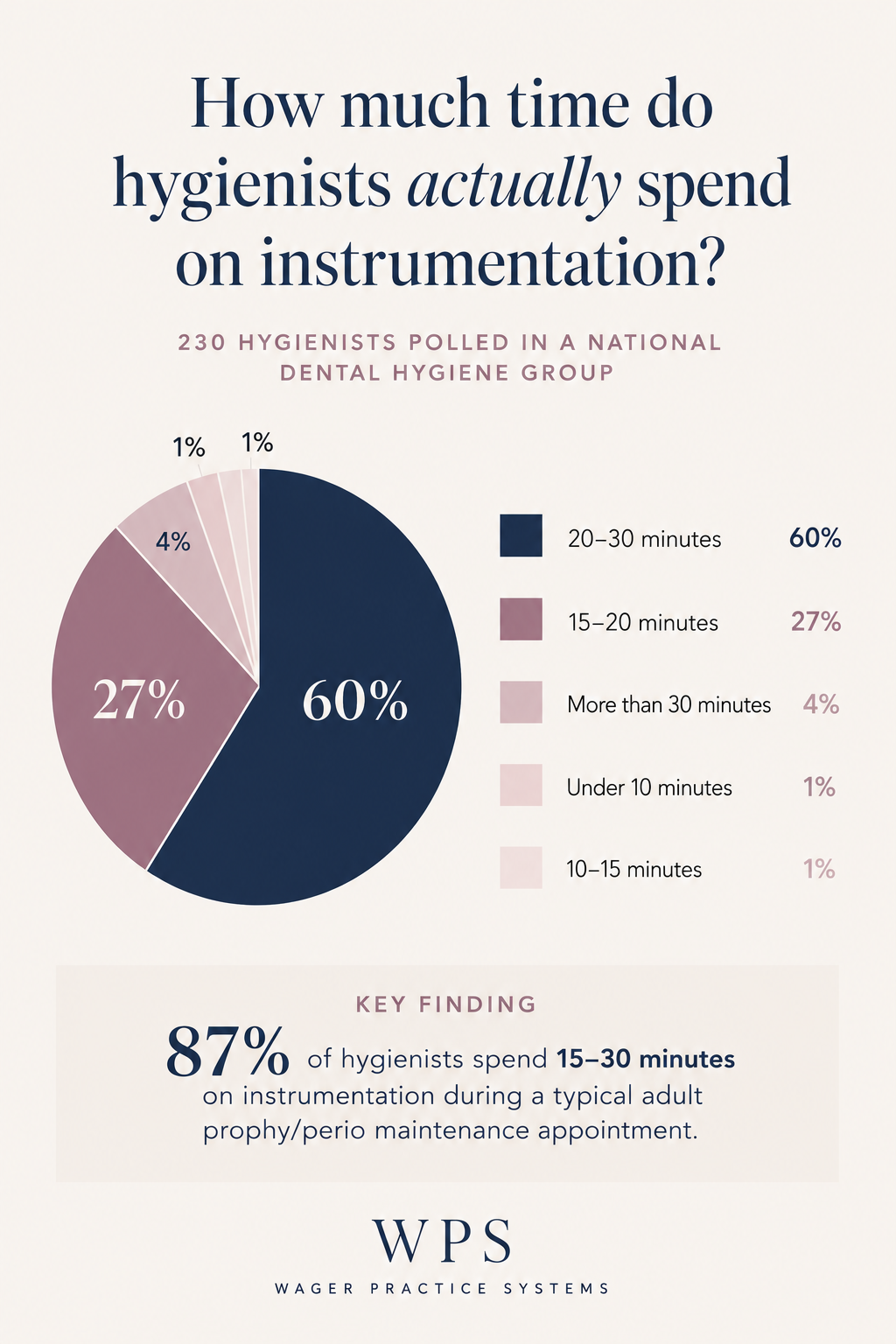
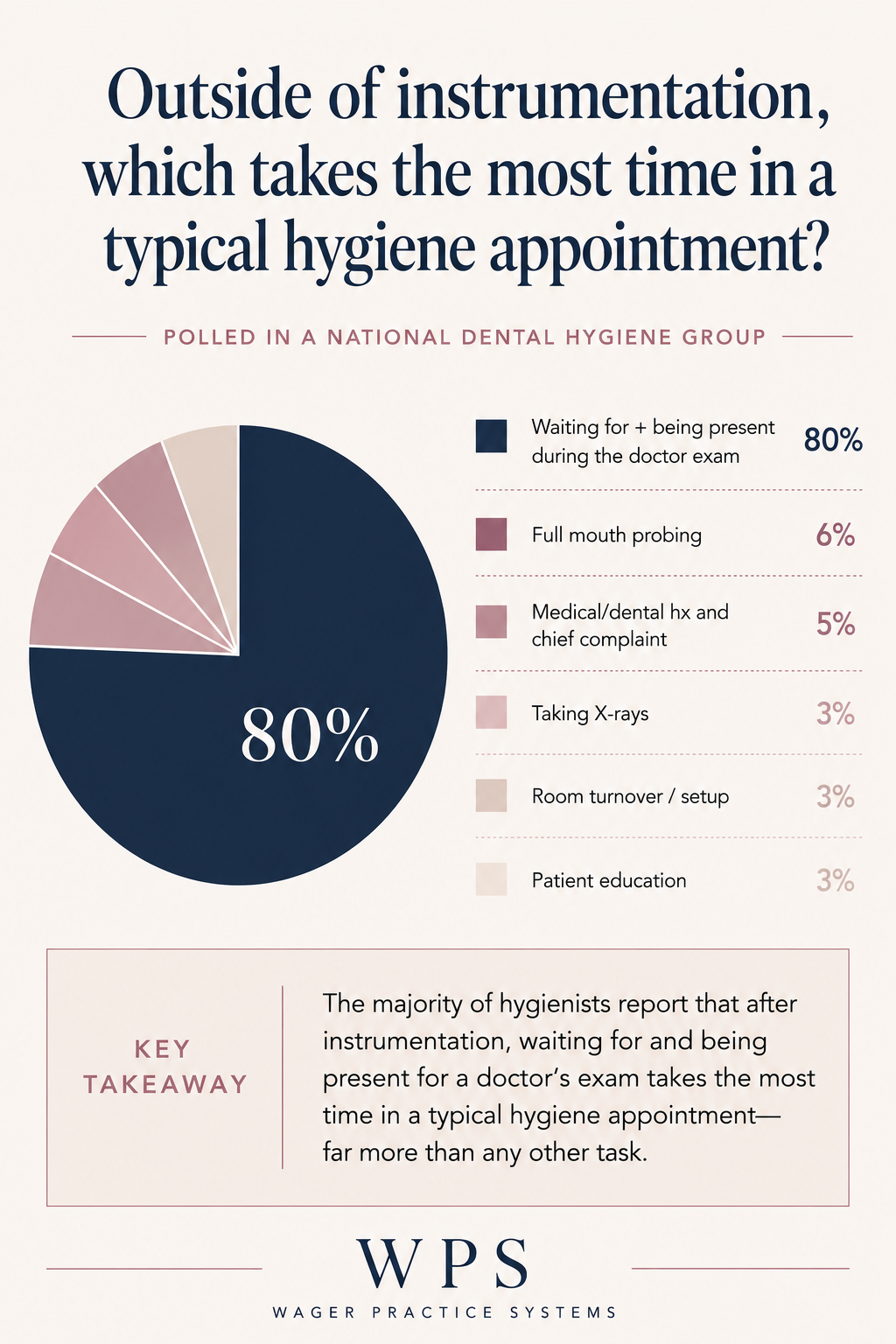
In one survey of more than 200 hygienists, 87% reported spending 15–30 minutes on instrumentation during a typical hygiene appointment. In another survey, the majority reported that after instrumentation, the largest block of time was spent waiting for the doctor exam.
When clinical providers spend a significant portion of their day taking radiographs, waiting for exams, turning over rooms, or completing tasks that could be delegated appropriately, practices may be operating below their true potential.
A well-designed assisted hygiene model helps address these inefficiencies by allowing the hygienist to spend more of their day performing the clinical services that only a hygienist can provide.
Learn More About Assisted Hygiene
If you're exploring assisted hygiene, these articles may help:
Your Hygienist Has an Hour. Only 30 Minutes Are Spent on Hygiene.
The Most Important Person in My Assisted Hygiene System Isn't Me.
Need Help Determining Whether Assisted Hygiene Is Right for Your Practice?
Every practice is different.
If you're struggling with hygiene capacity, hiring a hygienist, scheduling bottlenecks, or production growth, let's look at your current system together and determine whether assisted hygiene could help in your practice.